
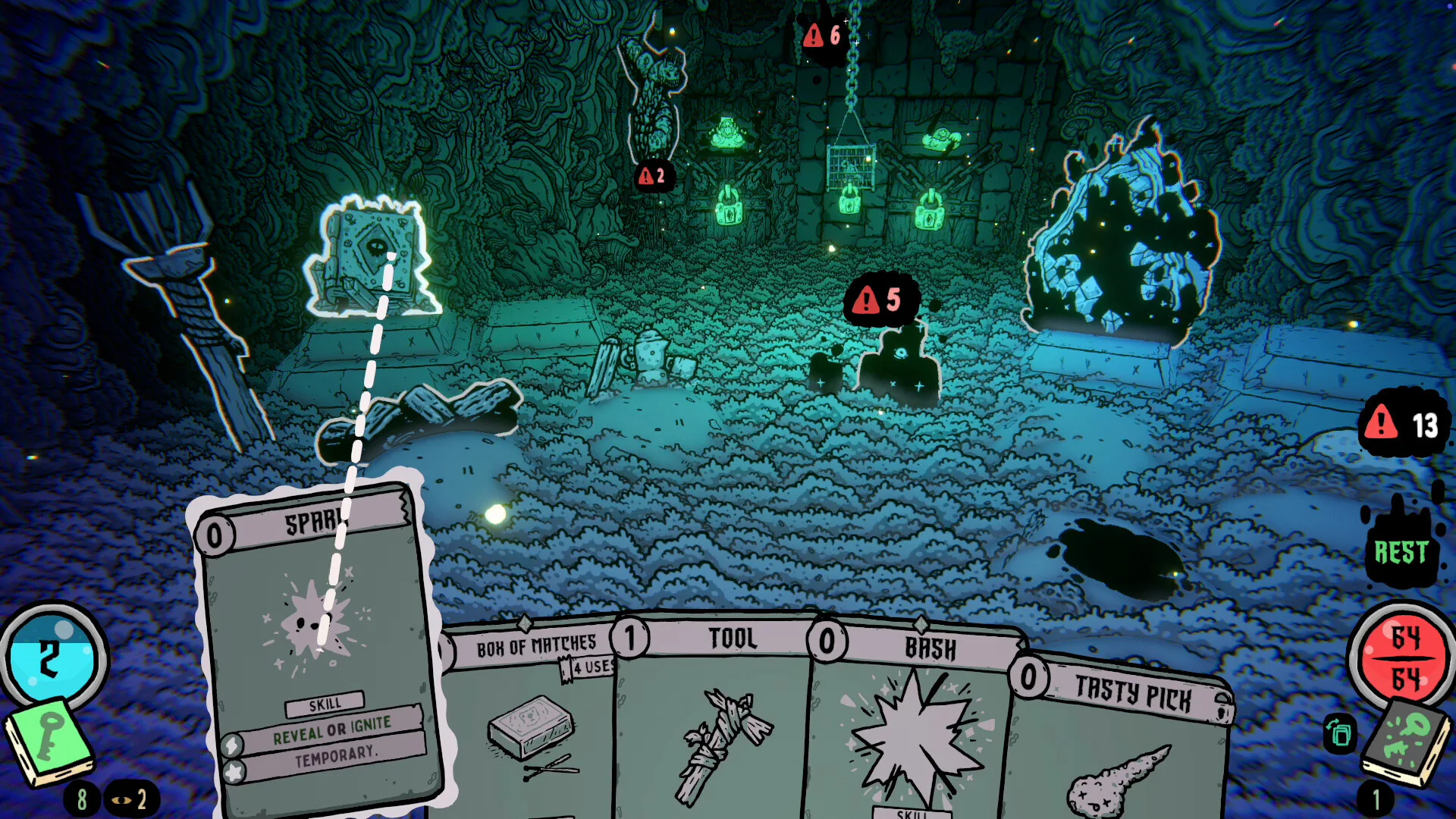
What are Foresight cards?
In Early Access, each launch character has a base Foresight card that changes how they play, alongside their starting Combat and Explore decks. Read that starting card as part of the character’s kit: it helps explain what makes one starting setup different from another.
The launch announcement identifies Paperboy, Janitor, Lunchlady, Activist and Concerned Parent. Their distinct starting decks and Foresight are a reason to re-read your kit when you switch characters.
Which part of the starting kit are you reading?
A character’s starting Combat deck, starting Explore deck and base Foresight are three parts of one kit. The launch announcement confirms that these vary between characters. Start with the effect actually provided by your selected character, then look at which cards can make its condition relevant.
That is different from checking how a future character unlocks. A quest reward, a starting effect and a card obtained later in a run should not be treated as interchangeable. For a locked Concerned Parent, the recovery article follows the specific fix announced in 0.6.41 rather than inferring a hidden Foresight requirement.
Read the kit in context
Scroll horizontally to view every column.
| Part of the kit | Where to look | Question it answers |
|---|---|---|
| Combat deck | Your character’s starting combat cards | What can I do during a fight? |
| Explore deck | Your character’s starting exploration cards | How can I interact with the room and develop the run? |
| Base Foresight | The starting effect supplied with the character | Which condition or bonus changes this character’s play? |
| Unlock requirement | The locked character or quest requirement | What must happen before I can choose that character? |
Read the condition before planning around the effect
When inspecting a Foresight, separate the event it refers to from the benefit it provides. Check when the event happens and whether your current cards help you reach it. If the wording includes a limit or destroys the card, include that in your plan.
This is a way to evaluate the text on your screen, not a ranking of Foresight cards. An appealing effect is only relevant to a decision when its own conditions can be met.
Keep Combat and Explore in view
Your starting kit includes both decks as well as its base Foresight. Read all three parts together before adding a card purely because its description sounds related. Identify what you can actually do in a fight and what you can do while exploring.
A conditional effect printed on another card is not automatically the same thing as a Foresight. The card reference uses Thin Skinned as an example of a card-level trigger; keep the source of each effect clear when comparing your options.
Lazarus in the older Demo notes
Lazarus is named in the July 2025 Demo update notes. Those notes describe a fix to its return sequence: a new turn and a fresh hand after it brings the player back. This is useful historical context when an older recording shows a different revival sequence.
The note is about that Demo version. It does not establish a current healing percentage, the number of times you can trigger the effect, or the rules for carrying it into another run.
Separate a starting bonus from progression
A character beginning with a base Foresight does not, by itself, explain what persists after death or victory. Treat a starting card, an extra choice during a run and an unlock for a future run as separate questions.
Before following an older Demo route, check whether its version and character setup match yours. A guide to that Demo’s draft system should not be treated as the instructions for every Early Access character.
How to compare a Foresight shown in a video
Begin with the version and the moment the effect appears. A character-selection screen can show a starting bonus; a reward screen can show a later choice. Neither image alone proves what will persist after the run ends. Follow the acquisition and subsequent behaviour before making a progression claim.
The older Demo’s Lazarus fix is useful for recognising a historical difference in revival flow. It is not evidence that every current character starts with that card, or that a particular healing percentage is unchanged. This guide therefore keeps the confirmed starting structure separate from an unverified complete list.
Choose the next mechanic to learn
Use the card reference to read individual effects, or the Soup guide to understand the connection between attacks and food. For a broader introduction, return to the first-run guide.