
How does soup fit into a run?
Soup belongs to Shroom and Gloom’s food system. Roasted enemies can become something to eat for recovery or ingredients for cooking. Making soup gives that food another use, so the decision begins with the cards you have and the result you want.
This guide covers the cooking loop and how to read its choices. Use the offered ingredients, cost and output in your game when making a particular soup.
Start with a card that produces food
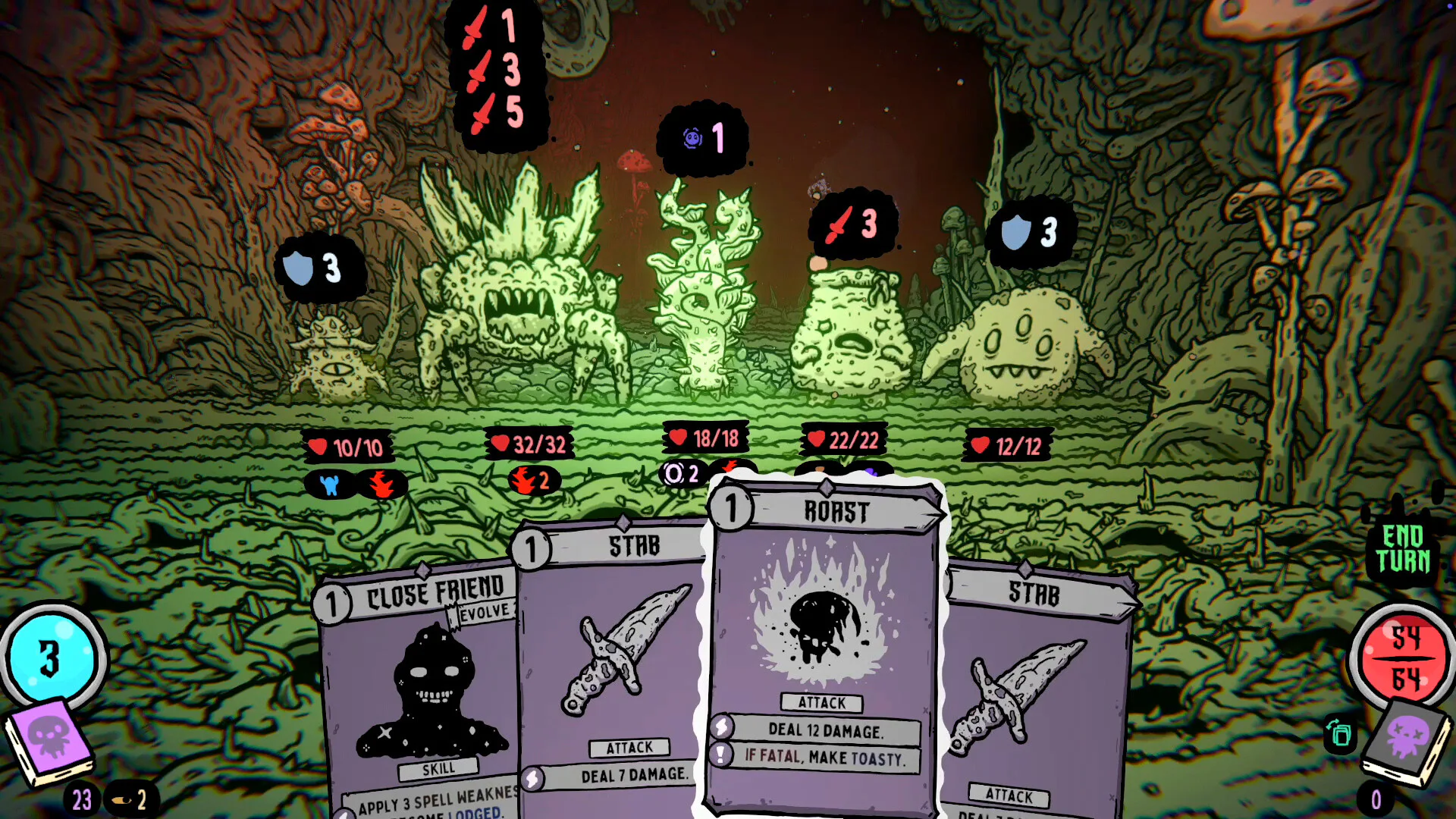
Roast is a useful example: its pictured card text creates a Toasty when the attack is fatal. The killing condition matters. An attack that leaves the target alive has not met that condition, even if it dealt a lot of damage.
Inferno provides another example. Its pictured card attacks all enemies and has a fatal effect that makes Hot Toasty. Read both the attack and its condition before planning the food you expect to have. The numbers on an upgraded card are not a reliable reference for an untouched copy.
Read the pot before spending ingredients
At a cooking opportunity, identify the offered result first. Compare the ingredients it asks for with the food you can spare, then inspect what the result actually does. A recovery effect, an attack improvement and extra card draw solve different problems; the name “soup” alone does not tell you which one you are choosing.
Keep the displayed cost separate from the benefit. An energy requirement is not a healing amount, and a remaining-use count is not an ingredient value. If a selection is locked, read its requirement before assuming that you need more of the same food.
What older Soup Pot notes tell you
The July 2025 Demo update notes describe Soup Pot improvements that exposed card values and the energy requirement of a locked choice. They also record a change allowing soups to serve as shop currency. These are dated Demo changes, so check the current interaction before applying them to an Early Access run.
For the same reason, a clip showing two uses remaining does not establish that a soup began with two uses. Follow the sequence from the moment the card was obtained, including any earlier use or modification.
Eating, cooking or improving a card
Choose around the next problem you need to solve. Compare immediate recovery with the effect of the offered soup; do not assume that a more elaborate food name makes the trade worthwhile. After obtaining or modifying a card, read it again before spending it.
Increasing an attack’s damage and changing a food’s cooking value are different claims. A damage-growing combination is not evidence of a universal method for increasing soup value.
Follow the cards behind the recipe
The card reference explains the difference between active effects, conditions and card properties. Start there when a cooking choice includes an unfamiliar type of effect.